
Lyophilized peptide powder: what the vial weight includes
Freeze-dried peptide powder is not pure peptide. Counter-ions and water add weight, so the label basis decides how much peptide a vial really holds.
What lyophilization is
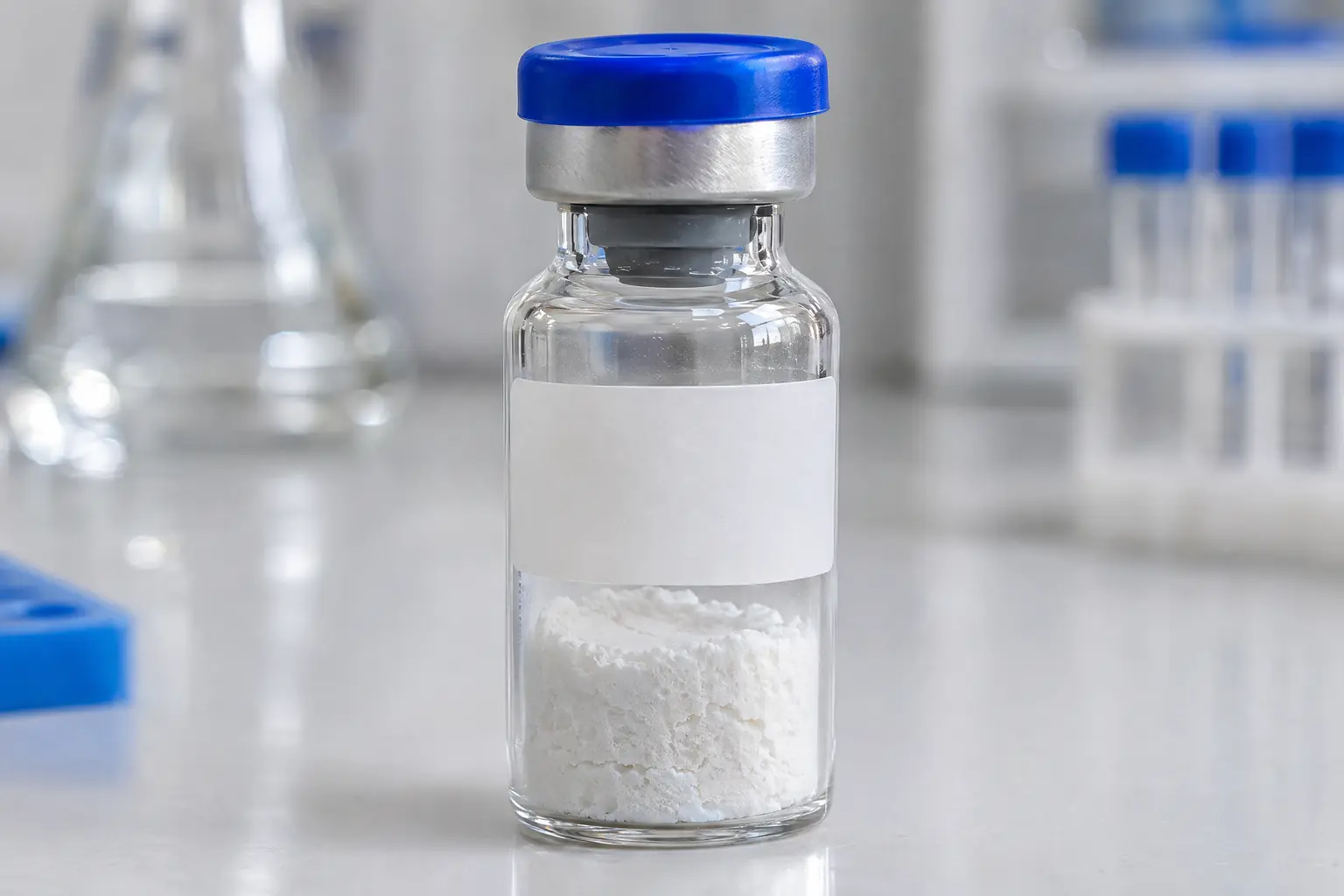
Lyophilization is freeze-drying. The peptide solution is frozen and the water is removed under vacuum, so it passes straight from ice to vapour. What remains is the dry white cake or powder in the vial, which is easier to store and ship than a solution.
Drying removes most of the water, not all of it. Peptide powder also attracts moisture from the air once a vial is opened, so the water content of the same material can change with handling.
What else is in the powder
Synthetic peptides are usually purified by reversed-phase chromatography and isolated as salts. The positively charged groups on the peptide carry counter-ions with them: commonly trifluoroacetate (TFA) from the purification solvent, or acetate or chloride after an exchange step. Those counter-ions are part of the powder weight but not part of the peptide.
- The peptide itself
- Counter-ions such as TFA, acetate or chloride
- Residual water
- Any excipient added to the formulation, which a label should declare
Gross weight and net peptide content
Gross weight is the mass of all the powder. Net peptide content is the share of that mass which is peptide. A vial filled with 10 mg of powder holds less than 10 mg of peptide, because some of the 10 mg is counter-ion and water.
A label rarely says which basis it uses. Ask the supplier whether the stated amount is the gross powder or the peptide, and whether the figure refers to the peptide base or a salt form. The molecular weight calculator gives the mass of the free peptide; the salt form weighs more per molecule.
Why purity does not settle it
HPLC area purity compares the peptide peak with the other peaks the detector sees. It is a relative figure within the chromatogram and does not weigh water or counter-ions. A powder can show 99% area purity and still contain much less peptide than the label suggests.
Only a quantitative content measurement, calibrated against a suitable reference standard, answers how many milligrams of peptide are in the vial. The certificate should state the basis of that figure so it can be compared with the label.
What to send with a sample
Send the vial sealed, with the label wording, the lot number and any statement of counter-ion or net peptide content from the supplier. If you need to know what is in the vial rather than what the powder weighs, ask for content in the request. At Canada Peptide Testing it is added to Peptide analysis on request at no extra charge when a suitable reference standard is available.
Continue with your sample or report
Nine checks for any peptide certificate, on one page you can keep beside the vial.